Subscribe Now!

Showing posts with label business signs. Show all posts

Thursday, March 25, 2010

Signs and Banners: Marketing Tools?

Using signs And banners for new business marketing is a good plan. If you think you have to concentrate all your efforts on internet marketing you are wrong. Sure the internet is the way to advertise in this age of the online business world but, as I have said before, the old traditional methods work too.

Signs and banners are an easy to use marketing tool that are great for many different types of businesses. You can find local sign companies that will not only print your banner or signs, but offer design assistance (some for free with your order) so you can ensure a professional banner or sign every time. You can find these forms of advertising in almost any industry or for a number of businesses. Why would they use banners or signs if they didn't work? The fact is,they wouldn't.

Many business have used banners to promote their business during trade shows. Using this advertising strategy will guarantee you some profit, and can boost your reputation. Not only that! Banners have spurred a whirlwind of different types of banner stands that can add dramatically to your set up.

You can get all the attention you want when you use vinyl banners and vinyl signs. A favorite with many people, vinyl banners are the best choice because they are durable, simple to maintain and versatile. Moreover, one of the most vital reasons for using vinyl to make banners is that it can be used on both indoors and outdoors. Due to its durability, vinyl can be mounted, hung, attached, or pasted on most surfaces making it simple to catch attention of the passersby. And the rapid changes in technology have now allowed large vinyl banners to be printed with relative ease and comfort using the spray paint technique. Whatever size vinyl banners may be needed, there is one that can be made for you.

If banners are so effective then, why use yard signs (or bandit signs as they are sometimes called)? Many many reasons, but three come immediately to mind:

1. Business yard signs help brand your company. The public needs repeated exposure to your company in order to maintain it in long-term memory.

2. Displaying yard signs is a symbol of pride. Don’t you take pride in the work and services performed by your company? Like other proud professionals, your company can sign your work too. Use yard signs to proudly promote and advertise the work you do. This is your signature - there for the world to see.

3. Signs are a marketing tool. They act as advertising signs alerting possible clients of your services. A business can benefit from varied forms of advertising. A well-positioned printed sign can recruit many customers.

Advertising is vital to any business, organization, or cause. When you feel strongly about a company you own or an organization you belong to, you want to get the word out. You want others to use your business services, join your organization, or support your cause. And the only way to get the word out to gain the interest of others is to market or advertise whatever it is you are promoting. If you are just getting started with your marketing campaign or you are looking for a simple and cost effective way to advertise, signs and banners are a common avenue to take.

Gwynn~

Wednesday, March 3, 2010

Sign Crackdown in LA Brings Jail Time & $1 Million Fine!

Ok - I brought you the Great Sign Debate... I even brought you the scandal over the re-emergence of the sign debate. Now I get the privilege of bringing you the latest news: City Attorney Carmen Trutanich arrested Kayvan Setareh, a 49-year-old businessman from Pacific Palisades, on Friday night for allegedly putting up an illegal DreamWorks supergraphic at Hollywood and Highland. A judge set the bail at a whopping $1 million for Setareh, who was still in jail as of this morning, according to ABC7, which reports that "legal experts believe Trutanich set Setareh's bail at $1 million to make an example of the businessman."

According to the LA Times, officials believe Setareh, who is said to have an ownership interest in the building, put up the supergraphic so television cameras airing this week's 82nd annual Academy Awards would pick up the image (the awards are held at the nearby Kodak Theater).

Meanwhile, more details emerged about Setareh's weekend in jail. After being arrested Friday night, Setareh spent three nights in jail, released only after the city attorney's office crafted a legal agreement that saw Setareh agree to remove the sign in return for a reduction in his bail, which was originally set at $1 million.

The cherry picker arrived at the Hollywood and Highland site by midnight, but a faulty part in the machine temporarily delayed removal of the supergraphic

Early this morning (around 1:00 AM) the removal of the supergraphic was proceeded over by a cherry picker, a crew, and three important figures. And those three men, all key players in this latest sign battle, would be: David Berger, special assistant to the City Attorney, who defended the high bail amount and dismissed speculation that by arresting Kayvan Setareh, the city was making an example of the Hollywood businessman ("It's not true we're making an example of him. He may be the first, but he’s not the last"); Andrew Stein, Setareh's attorney, who said his client just got caught up in the city's sudden sign crackdown (“My client had bad luck. He put up the sign at an inappropriate time for himself…we don’t think he did anything that was against the law”); and Al Gonzalez of Los Angeles-based sign installation company Kingsize, who refused to talk about whether he knew the How to Train Your Dragon movie sign was illegal when he put it up last week (“I can’t discuss this because we’re not involved ”), and who, on the advice of Stein, asked that no head-on photos be taken of himself or his seven-person crew as they removed the sign. Setareh, who'd been released on bail earlier in the day, wasn't around, and likely was resting at his home in Pacific Palisades. Asked to describe his client's mental state following his arrest, Stein replied, "Stunned."

Setareh will be arraigned in late March for three misdemeanors related to the installation of the sign, and if found guilty, could face a total of 18 months in jail, six months for each misdemeanor, according to Berger. Berger, who says Setareh's high bail amount was set in conjunction with the public safety threat posed by the graphic, says the crackdown on illegal signage will continue. "We are aware of other locations." With the criminal charges filed, and more apparently coming, is it "the dawn of a new day" in terms of sign regulation, as the Coalition to Ban Billboard Blight's Dennis Hathaway told the Los Angeles Times today?

This was not the first time that Setareh had become a target for city inspectors. As early as 2001, they filed paperwork ordering him to remove an unpermitted supergraphic from his property on Hollywood Boulevard.

Inspectors went to the building again in January 2007 and found an
unpermitted supergraphic measuring 224 feet by 40 feet stretched across the building's north, west and south walls, according to records obtained from the Department of Building and Safety.

The sign was taken down 10 days later. But another went up on the same building in March 2007, according to a timeline created by building inspectors. After the city demanded its removal, the sign went down in June 2007. It was replaced by a third supergraphic in August that stayed for a year, according to records.

Setareh also drew the attention of inspectors at a building he owns at 5858 Hollywood Boulevard. At that location, city prosecutors pressed Setareh to remove four unpermitted su
pergraphics between November 2006 and July 2007, according to documents.

The irony of this whole situation becomes clearly apparent if you take a look at the building directly across the street. Another illegal supergraphic on a building located directly across the street from the Hollywood and Highland building!

So, they had a cherry picker out late into the wee hours of the morning in order to remove one supergraphic - jailed a man Friday with bail set at $1 million dollars while periodically (unless they were absolutely blind) glancing at the other illegal supergraphic? Doesn't that spell irony to you, dear reader? Perhaps Mr. Setareh was only hit so hard due to the past offenses? But, even if that were so, they have now set a standard. And expecting one man to meet that standard by placing such a harsh penalty while blatantly ignoring other buildings that are in violation of that same standard, is a gross abuse of power and privilege.

Gwynn~

Wednesday, February 24, 2010

The Great Sign Debate Rages on!


In March 2009, I brought you the news concerning the great sign debate in Los Angeles. Wednesday, March 18, 2009, a divided Los Angeles Planning Commission failed to overhaul the city's billboard law with some members saying a proposed sign ordinance grants too many exceptions to the outdoor advertising industry. The panel, which needed five votes to send a rewritten sign law to the City Council, deadlocked on a series of 4-3 votes. However, the Los Angeles Planning Commission re-voted Thursday, March 26, 2009 to recommend dramatically reworked restrictions on signs that would ban digital billboards and super graphics -- the vinyl signs stretched across the sides of buildings -- throughout most of the city. The commission voted 6 to 3 to forward the ordinance to the City Council.

The Great Sign Debate, for all intents and purposes, had ended. Well... then again...

As of February 22nd, 2010, Los Angeles City Atty. Carmen Trutanich (who took office July 1 after promising during last year's election campaign that he would crack down on unpermitted billboards) launched a fresh assault against the outdoor advertising industry, announcing the filing of a lawsuit alleging that supergraphics were unlawfully installed on 12 buildings throughout the city.

The nuisance-abatement suit contends that multistory vinyl ads were placed illegally on the Sherman Oaks Galleria, the Howard Hughes Center in Westchester and other buildings in North Hollywood, Sherman Oaks and elsewhere.

The civil complaint filed Monday accuses outdoor advertising company World Wide Rush LLC and 26 associates, property owners and sign installers of putting up the massive posters in violation of a city council ban that aimed to stem the proliferation of supergraphics and digital billboards. The city's lawsuit names 27 defendants, including World Wide Rush, which already has a billboard case pending before the U.S. 9th Circuit Court of Appeals. The company is seeking to strike down the city's ban on the installation of new supergraphics.

The complaint, which also alleges violations of California's Outdoor Advertising Act and other state laws and local ordinances, argues that supergraphic signs endanger the covered buildings' occupants, distract drivers and hurt the look of streets.

It seeks the signs' removal and damages that could total more than $10 million, as well an injunction prohibiting new signs from being installed.

Chief Assistant City Attorney Jeffrey Isaacs said Tuesday that the lawsuit, which lists 12 Los Angeles locations where illegal signs were allegedly installed, is part of his office's new strategy of aggressive sign law enforcement. Council members said they cast their votes for the blanket ban in hopes of heading off the types of legal challenges that bedeviled previous billboard regulations that carved out exceptions permitting some signs.

In one of those challenges, a federal judge agreed with an argument by World Wide Rush that the exceptions raised free speech concerns because they gave city officials too much leeway in deciding which signs to allow.

Officials are appealing that decision, which led to a contempt proceeding after officials issued citations against the company despite the permanent injunction issued by U.S. District Judge Audrey Collins in 2008 that protected 10 of the 12 locations named in this week's lawsuit. Isaacs said the latest lawsuit does not conflict with Collins' order because the supergraphics were installed after the city approved new ordinances governing outdoor advertising.

The city has been on the defensive for years as it has sought to regulate such advertisements, with an estimated 30 lawsuits challenging its sign laws and billboard inspection fees. Trutanich said he intends to seek fines of up to $5,000 for every day that an illegal supergraphic is on a building. In cases in which a sign is illegally placed next to a freeway, he also intends to seek a $10,000 fine, plus $100 for each day the sign is up. World Wide Rush urged the court to impose a $100,000 fine against the city, plus $10,000 for each day that Trutanich fails to drop the older case. The sign company also called for Collins to hold the city in criminal contempt and to order Trutanich, the L.A. City Council and Mayor Antonio Villaraigosa into federal custody.

Now now boys! Maybe what we need here is a time out? I know it worked well when my son got all puffed up and bent out of shape. Of course, he was younger then. These days he knows how to hold his breath and count to ten before losing it. Not that I'm knocking either view point. Really, I swear I'm not. But gentlemen, for the love of peace, grow up and stop hacking at each other like little boys! Federal custody? Seriously? Over SIGNS? OK... I don't see it. But hey, I'm just a writer. With that in mind, I will quietly exit stage right and leave you two to duke it out.

Gwynn~

Tuesday, February 16, 2010

Small Business Visibility

Customers can't buy from you if they don't know your business exists. This is an obvious statement, but I have found that many small business owners who are trying to increase their sales don't realize how "invisible" their businesses are.

Small business owners should spend some time investigating just how visible their business is and what they can do to increase their visibility. The following are some things you would want to consider.

Advertising:

How visible is your advertising to your target market? To answer this question, you first need to be able to describe your targeted customers and understand their habits. Then take a look at your advertising methods and compare that with what your customers read, watch, listen to, etc.

The right people need to see your message about your business and understand that you can meet their needs. Conducting a thorough "marketing audit" of your business can help you determine the best advertising methods to implement to be more visible to the right people.

Location:

How visible is your actual physical location to your customers? One way to gauge this is by simply asking customers who do come in whether they had trouble locating the business, and if they did, why.

Another way is to really take an objective look yourself. Is your sign highly visible? How easy is it to read, not only from nearby but from the street? Are you taking advantage of traffic flow?

How attractive is your building or your portion of the building? Is there anything obstructing the view of your business and can you change that? You can also have persons unfamiliar with your business do some "mystery shopping" to see what they have to say about the visibility of your location.

Internet:

How visible is your business to those searching the Internet for your product or services? Don't just put yourself out there and hope for the best. It takes money, time and effort to increase the chances that your business will be found by the right people.

Your Web site's ranking with the search engines is affected by things such as the domain name that you use, your use of pictures, the content of your text, your use of social media such as Face Book and Twitter, the age of your Web site and more.

You need to get professional assistance to be sure your Web site is properly designed and maintained for maximum benefit.

Also, you could have some "mystery shopping" of your Web site done to find ways to improve its visibility and effect on your bottom line. And always be sure to direct potential customers to your Web site through your other promotional methods.

Community:

How visible are you and your business in your community? You can get so busy working on the everyday operation of your business that you don't take the time to get out and do some needed networking.

Are there organizations in your community in which you should become involved? This could be a chamber of commerce or business association but not necessarily.

Are there organizations with goals that you truly care about with which you could become involved? Are they in any way related to your business? How can you make a contribution to the improvement of your community?

The above are a just a few examples of opportunities to improve the visibility of your business and increase sales revenue.

Gwynn~

Wednesday, February 10, 2010

General laws regarding placement of bandit signs

Flyposting (the act of placing advertising posters or flyers in illegal places) or placing bandit signs can be illegal types of advertising depending on how you use them. It’s illegal in the sense that posters or snipe signs are placed in NO POSTING areas. These types of signs are temporary advertising methods and are categorized as street spam.

It is illegal to put up signs on private properties, especially without permission from property owners. Posting on public properties without acquiring permits from your local government is also a big NO NO. Often, a specified area is provided for the public whereby all various notices may be placed.

Often, bandit signs are placed by small-scale businesses giving notice of promotions or sales. Political activists also resort to flyposting in order to avoid arrest or discovery of identity. Property rights, littering, and visual appearance have been raised as issues against flyposting. Seen as a nuisance, illegal signs damage properties and distract motorists. Don’t be surprised to find out that even well known companies have had run-ins with the law for placing bandit signs.

If you want to put up temporary signs in your local area, consult your local government about laws you should avoid breaking. Illegal advertisements can cause you prosecution and heavy fines. Make sure your signs do not fall in categories that are prohibited from public adverts. These categories are social, religious, and recreational advertisements. It is best to check before you post the signs anywhere and enter into legal formalities with the law.

Authorities are angered by signs that ruin or dirty city or country views. Snipe signs on lampposts, buildings, trash bins, and railings are illegal. Owners of these illegal signs are given a notice by mail or telephone about the illegality and are given a deadline for removal. Often, they are given 24 hours to ensure the removal of all illegal signs they have placed. To discourage others from imitating these illegal methods of advertising, enforcers often place stickers or notices on top of these signs. At times, the signs are immediately removed upon discovery, most especially on highways or public roads.

Illegal signs on highways and public roads can be distracting and dangerous. Reports of motorists getting into accidents have been documented. The government takes this seriously. The Highways Act 1980 states that it is a crime for people/entities to obstruct highways. Instruction for immediate removal is given. Otherwise, heavy fines are to be expected by the offenders. Local authorities reserve the right to take down and dispose of any illegal signs without further notice.

Check local laws before flyposting of any kind. Spare yourself from costly fines, fixed penalty notice, and even prosecution in court. It is best to do it within the confines of the laws but most people circumnavigate by putting these up on Friday and taking them down by Monday morning.

Gwynn~
Content submitted by Noelle Noble

Monday, February 1, 2010

State Ordinance Regulations for Signage

Please ensure that you follow local and state guidelines for signage! I have listed each state below. Clicking these links will take you to a page that breaks out the states by city. By clicking on your chosen city, you will be presented with that cities codes. Locate the sign ordinance and ensure that you are within the regulations.

Step 1 - Understand the importance of sign ordinances to community beautification efforts. Local conservation groups and community-improvement organizations try to limit the size of signs, preventing them from becoming a distractive nuisance.

Step 2 - Speak with your city council about regulations restricting the use of signs attached to your buildings. Each community has ordinances that regulate the size, placement and content of signs that may be unique from other communities. In order to obey local laws, you should approach the city council with any unusual signage requests.

Step 3 - Consult with your state's highway department about billboards and logos placed on highway exit signs. While private property owners can place any advertisement they want on a billboard, most highway departments help regulate the size of billboards to avoid distractions to drivers. Highway department officials can also help you re-size your logo to meet exit-sign standards and promote your business effectively.

Step 4 - Make sure you obey signage ordinances that regulate the placement of private signs adjacent to public signs. Your signs cannot block those indicating street names, speed limits and traffic warnings because of public safety concerns.

Step 5 - Avoid violation of city laws that govern the color and design of business signs. While some communities allow business owners freedom to choose their design aesthetics, most cities prohibit bright colors or flashing lights to avoid traffic issues. Likewise, city councils will often prevent business owners from creating signage that is lewd or inappropriate for children.

Step 6 - Learn about the National Scenic Byways Program. Featured on Byways.org, it is devoted to protecting highways and waterways from over development, including excessive signage.

State Ordinances:

Texas
Washington
Oregon
California
Idaho
NevadaArizona
Utah
Wyoming
Montana
Colorado
New Mexico
Oklahoma
Kansas
Nebraska
S Dakota
N Dakota
Minnesota
Iowa
Missouri
Arkansas
Louisiana
Wisconsin
Illinois
Tennessee
Mississippi
Indiana
Alabama
Kentucky
Michigan
Ohio
West Virginia
Virginia
N Carolina
S Carolina
Georgia
Florida
Pennsylvania
Maryland
Delaware
New Jersey
Connecticut
New York
Massachusetts
Rhode Island
Vermont
New Hampshire
Maine
Hawaii
Alaska

If you have information pertaining to any of these ordinances (changes that are not listed, etc.), please email me or post them in a comment below!

Thanks!
Gwynn~

Monday, January 25, 2010

Are Banners and Yard Signs Right for Your Business?

Outdoor advertising with banners and yard signs

There are a number of outdoor advertising venues that numerous businesses and other organizations take advantage of in order to boost their business. The two most commonly used venues are banners and yard signs, and for all practical purposes, they are two of the most cost-effective methods as well. Businesses and other organizations will use banners and yard signs to advertise and/or promote a number of things from products and services to charitable or sporting events.

The advantages of using banners and yard signs

If you’re looking for the most cost-effective or low cost advertising, banners and yard signs definitely have the edge over other forms of outdoor advertising. So why is it that banners and yard signs are some of the most effective forms of advertising? There are a number of reasons but the following are still the most common reasons for this:

Banners and yard signs are like mini-billboards and are the most visible types of fixed outdoor advertising other than roadside billboards. Where marketing campaigns are concerned, banners and yard signs can be customized to promote a number of different things such as:

o The announcement of an upcoming event
o Promoting your business and promoting brand awareness
o Advertising your products or services
o Targeting certain demographic audiences

These are the four most common marketing strategies that banners and yard signs are used for, but there are other uses as well. This sheds light on the two key reasons why banners and yard signs are used by so many businesses and organizations and are such an effective form of advertising – the FUNCTIONALITY and VERSATILITY aspects.

Three reasons for using banners and yard signs to promote your business

Advertising is a way for you to promote your business, specific brand names, your products, or your services. They also inform the consumer of the benefits of using them as well as how your business, brand names, products, or services will solve their problems. Any time a consumer gets connected with your products and/or services and the purchasing of these fixes or solves a problem for that consumer; your advertising is considered effective.

The biggest advantage to using banners and yard signs for outdoor advertising is that they accomplish three important things:

They deliver your message to the consumer – the message is that your products or services will help fix or solve a problem for the consumer.

They provide directional information – this is the “what, where, and when” aspect of advertising with banners and yard signs in that you are telling the consumer what you are offering, where you are offering it, and when it is being offered. Examples of directional information are direction arrows, phone numbers, street addresses, and/or websites.

They make a call to action – key words such as BUY NOW or CALL US TODAY are calls to action in that you are telling the consumer what to do. Keep in mind that the call to action is the primary reason for using banners and yard signs as part of your marketing strategy.

Gwynn~ content submitted by Noelle Noble

Monday, January 11, 2010

Sign Ordinance Changes!

San Jose City Council to review proposed changes to city's sign ordinance! Not only San Jose either :-) We will be seeing changes in Towanda Borough, Pennsylvania as well!

On Tuesday, for the first time since 1992, the City Council will consider a comprehensive update of San Jose's sign ordinance, including so-called "supergraphic" signs, temporary signs on blank walls in downtown San Jose. The council also will review seven other sign modification recommendations to the ordinance made by the city's planning staff, which has sought the input of businesses and residents in several public meetings over the last year. The council also will consider whether to retain the city's existing billboard ban for both static and electronic/digital billboards; whether to allow freeway signs with a digital/electronic component for large shopping centers; and whether to modify rules for electronic/digital signs for large ground floor spaces in downtown San Jose, among other proposals.

To find out more about the ordinance changes in San Jose, you can contact Tracy Seipel at 408 275-0140 or e-mail: tseipel@mercurynews.com

One down, and one to go!

Towanda Borough, Pennsylvania now allows neon signs in store windows!
The Towanda Borough Council has amended its sign ordinance to allow internally-illuminated signs in showroom windows. However, the signs cannot flash and the words of the sign cannot "move" across the sign. Also, the signs cannot be more than 25 square feet, according to the amendment to the ordinance that was passed.

To find out more about the ordinance changes in Towanda Borough, Pennsylvania, you can contact James Loewenstein at (570) 265-1633; or e-mail: jloewenstein@thedailyreview.com


Thanks for reading! Gwynn~
Information for this article was taken from Mercury News and The Daily Review

Wednesday, January 6, 2010

Long time no write!

Well my friends, it has been several months since my last post here and I have missed all of my readers! To make a long story short, time constraints took me away from the words, thoughts, and readers that always made my day brighter. Time constraints are still here but not as pressing as they used to be! Therefore, I am going to do my best to post at least once a week.

Today's topic? Hmmmm..... let's see..... Oh! I know :-) SIGNS! LOL

It is the new year and I say we start it with a laugh, so here is a glimpse of a few of the funnier signs and banners from last year and a few of the funnier signs printed at Super Cheap Signs. Hope you guys get as good a laugh as I did! As always, if you need something to announce that special occasion, business, or just need some cheap advertising, please check out Super Cheap Signs! They now have business cards and door hangers too! Now.... on to the laughter :-)


Gwynn~

Tuesday, September 1, 2009

Sign not big enough?

So, you've decided that you need to advertise - to get your name out there or announce something special - but a sign just isn't what you have in mind. You're thinking bigger, brighter or just plain showing off. OR (since we ALL want bigger, better and the opportunity to show off) why not all three? I have the perfect solution!

A banner is a great way to advertise and is an excellent addition to any social occasion or event. Banner designs can include photographs, artwork, fancy backgrounds, and company logos. In other words, any graphic image that can be captured in a computer file can be printed on a vinyl banner. Banners are resilient and last a long time either indoors or outdoors making them a smart investment. Vinyl banners can withstand tough weather conditions, their colors won’t fade under the heat of the sun, and their material won’t surrender to wind, water or snow. The great advantage of banners is that they are made of flexible and lightweight material. That means a vinyl banner can be rolled up or folded when it is time to take it down or move it to a new location. They are also relatively inexpensive. But most importantly - they get NOTICED! Banners are everywhere - event shows, store fronts, birthdays, graduations - you name it and chances are a banner, at one point or another, has advertised or announced it. If you want to captivate an audience, banners are simply the way to go.

The best place to find a source for vinyl banners is on the internet. A small number of companies specialize in providing low cost, fast-turn-around vinyl banners. One that I am more familiar with is supercheapsigns.com. They offer a variety of sizes to choose from as well as templates to get you started. If you already know what you want on your banner, then you can simply upload the file that contains your information. In a short time you will have a proof that allows you to see what your banner will look like before it is ever printed!

So - if you need to advertise a new business, a new location, a service, an event or a number of other possibilities where a yard sign just won't do - try a banner!

Monday, March 30, 2009

The Great Sign Debate - Update

Wednesday, March 18th, a divided Los Angeles Planning Commission failed to overhaul the city's billboard law with some members saying a proposed sign ordinance grants too many exceptions to the outdoor advertising industry. The panel, which needed five votes to send a rewritten sign law to the City Council, deadlocked on a series of 4-3 votes.

The Los Angeles Planning Commission re-voted Thursday, March 26th to recommend dramatically reworked restrictions on signs that would ban digital billboards and super graphics -- the vinyl signs stretched across the sides of buildings -- throughout most of the city.The commission voted 6 to 3 to forward the ordinance to the City Council, which is expected to vote on the measure by June, when a temporary sign moratorium is set to expire. The council hopes to approve the billboard rules before June, when a six-month sign moratorium expires. Planning officials already are reviewing requests from council members and real estate developers for seven billboard districts in such areas as Mid-City, Hollywood and Universal City. The proposed law also would allow certain exceptions to the city's sign rules for development projects that are larger than 100,000 square feet. Voting against the measure were commissioners Michael Woo, Cindy Montanez and Father Spencer Kezios. Last week, they voiced dismay that the plan provided too many exceptions for new signs.

Under the proposal, most new signs in Los Angeles -- including "sale" signs painted on storefront windows and gas station pole signs -- would be significantly smaller than those currently allowed, half the size in some cases. Signs and billboards that already have city permits would not be affected by the measure.

Gwynn~

Thursday, March 26, 2009

The Great Sign Debate

Picture by Kirk McKoy, Los Angeles Times


The great sign debate continues in Los Angeles! Not sure I’m too surprised by that after they extended the moratorium until today (March 26) in December of 08’ then extended it again until May 10th on February 24, 09’. However, the ICO [Interim Control Ordinance] still expires today and, according to a statement from Councilman Jack Weiss' office in February, if the ICO is allowed to lapse for even one day, "a flurry of illegal signs could be installed and be nearly impossible to remove later." As parts of the battle play out in court, complicated by free-speech questions, billboard companies have rushed to put up as many new signs as they can. The result is a legal and political mess.


“In recent weeks, fueled by anger about what public officials have allowed opportunistic billboard companies to get away with, the Great Signage Debate has become L.A.'s version of the AIG bonus scandal, with political posturing to match. Fresh drama is likely to unfold this morning, when the Planning Commission meets in Van Nuys to try to break its recent deadlock, pass a new sign ordinance and send it along to the City Council (Christopher Hawthorn, March 26, 2009).”


Because I recently blogged about this in Moratorium extended on digital signs in L.A., I thought I would share L.A.’s great signage debate by Christopher Hawthorn which was printed in the Los Angeles Times today. It is a more philosophical look at the mess surrounding this debate and the reasons behind it.


Gwynn~

Tuesday, March 17, 2009

It's a sign!

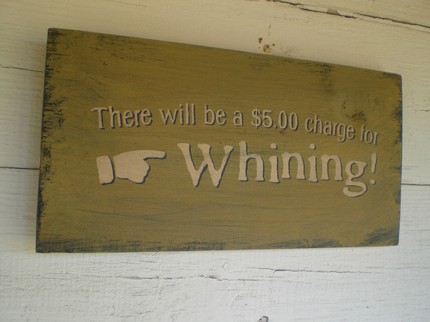
SO... this is a bit of a change from my general blog posts but, seeing as the sign was just too funny to pass up, I couldn't help myself.

All people tend to engage in a bit of moaning and groaning on occasion... even a little bit of self pity... but when it gets to the point that they can share only the moaning, groaning, and self pity with the world, they have officially engaged in whining.

Wouldn't it be great to have a sign like this posted? Think about it... the whining begins - all you have to do is point to the sign like a librarian on a silence mission and wait. The whiner will either be affronted that you have had the audacity to actually point the sign out (in which case a deep silence will ensue), or the whiner will stop whining. In either case, you are once again granted peace of mind. :-P

Gwynn~

Monday, March 16, 2009

Las Vegas Icon


The famous "Welcome to Fabulous Las Vegas" sign has moved one step closer to being placed in the National Register of Historic Places. The state board of museums on Friday nominated the sign for placement on the list managed by the National Park Service.

After a meeting of the state Board for Museums and History in Carson City, paperwork to include the sign can move forward, county spokesman Erik Pappa said. The sign could be included as soon as May.

“This sign has become a very important symbol for our community,” Clark County Commission Chairman Rory Reid, whose district includes the sign, said in a statement. “Untold thousands have had their photos taken in front of the sign. Placing the sign in the National Register makes eminent sense, especially now during the county’s centennial year.”

In its application, the county argues the neon sign is a cultural icon and a notable example of modern architecture. The county cites the sign's historic significance as an icon of post-World War II entertainment, tourism and advertising industries. It says the sign is "an excellent example of Exaggerated Modern/Googie architecture" and notes that designer Betty Whitehead Willis was a Las Vegas native who had a respected career as a graphic designer. The sign was created in 1959. It reads “Welcome to Fabulous Las Vegas, Nevada” on the front and “Come Back Soon” on the back.

Gwynn~

Original story by Cara McCoy
Las Vegas Sun
Fri, Mar 13, 2009

Wednesday, March 11, 2009

Realtor Wars Caught on Camera!

I was perusing the recent blog posts for yesterday and today, and came across the piece below. As many people know, especially during election time, yard signs tend to grow legs and walk away, get torched, or vandalized in many different ways. Most of the time, there really isn't much that authorities can do to combat this type of behavior because they generally don't have evidence as to who the vandalizing party is. Art Mullen, of South Mills, North Carolina, decided to take extra measures and caught his vandal on camera...

A Fort Mill real estate agent ended up in handcuffs after he was allegedly caught on tape cutting down a competitor's business sign.

"Shows him vandalizing the sign, stomping down the sign, that's when I called the authorities," said realtor Art Mullen.

NewsChannel 36 cameras were there when deputies with the York County Sheriff's Office took real estate agent Daniel LaFranca Jr. into custody Monday afternoon. The deputies were serving a damage of property warrant.

"Were you vandalizing your competitor's signs?" we asked LaFranca as deputies escorted him into a squad car.

"Not at all," LaFranca responded.

However, Mullen says his hidden camera video solved a five-month mystery.

"I've had a lot of my signs go ahead getting cut up, stolen, vandalized and I never really knew who it was," Mullen said. "I was frustrated. So what I did is I had some friends and some colleagues, we set up video surveillance."

Mullen claims the surveillance video shows his former boss, LaFranca, using a box cutter to slash his sign.

"He signed a non-compete clause with my company," LaFranca told us of Mullen.

Mullen says he's done nothing wrong and has had hundreds of signs either stolen or damaged after he stopped working for LaFranca.

"We didn't leave in the best of terms," Mullen said. "I made a lot of money in that company."

LaFranca denies wrongdoing.

"That's not you on video?" we asked LaFranca.

"Not that I know of," he responded.

Mullen says it's the ugly side of business during struggling housing market.

"I think it's a sign of the times," said Mullen.

The York County Sheriff's Office told NewsChannel 36 LaFranca wouldn't face jail time, but if found guilty he could end up paying a fine.

Gwynn~

Original story by MARIO ROLDAN
NewsChannel 36 Posted: Tuesday, Mar. 10, 2009

Thursday, March 5, 2009

Operation Clean Sweep!

Operation "Clean Sweep" (as I like to call it), was enacted on February 28, 2009, by Pete Constant and a group of volunteers partnered with code enforcement to sweep the neighborhoods of San Jose clean of signs.

"No signs are allowed on the city's property or on telephone poles regardless of the message," said Matthews, the code enforcement division manager. After fielding countless complaints about signs in his constituents' neighborhoods, one city councilman recently decided to take matters into his own hands. More than 80 students, parents and members of the surrounding neighborhood associations, scoured the streets to get rid of temporary signage such as "garage sale" signs, "open house" signs, "for sale" signs, etc. The group removed more than 300 signs.

This was the first organized sweep ever conducted by a public-private partnership in San Jose to address a community concern. Though volunteers had never been utilized in such an action, it is apparent that they were up to the task and willing to answer the call. This poses a question: How many more community partnerships might be called for in future? And where? With ordnance codes becoming stricter as time goes by, this author is left to wonder where companies will find themselves standing when it comes to affordable advertising. Though sign ordnances differ with each city, county or state, there has always been a way for wily businesses to skirt the edges and advertise their services and/or products with this type of cheap signage. I have to wonder if this type of community sweep will become a catchy thing for other neighborhoods. If so, I'm afraid that the average small businesses public exposure will become severely limited.

Gwynn~

Original story: San Jose neighbors hit the streets in search of illegal signs
By Tiffany Carney
West San Jose Resident
Posted: 03/03/2009 06:15:34 PM PST

Monday, March 2, 2009

Neighborhoods oppose bright LED signs near homes

Some neighborhood activists are appalled by LED signs such as this outside ACE Hardware on Highway 100. Many council members, however, think that some places should be allowed to have the signs to get attention along busy streets.

Photo by: Josh Anderson/ For the Tennessean

__________________________________________________________________________________

The possibility that electronic signs will go up in residential areas of Nashville has neighborhood groups feeling anxious again, a year after a Metro Council proposal fell by the wayside. Though the council bill to let churches and schools put up light-emitting diode signs in residential zoning districts was deferred indefinitely last March, it inspired the creation of a task force to study sign issues and recommend changes. The task force, appointed last summer, is now close to finishing its work and submitting legislation to the council. Members of the panel, which will meet at least one more time, said much of their work has focused on LED signs, the kind used by some banks, chain drugstores, auto dealerships and other businesses.

while some folks like Councilman Charlie Tygard still believe churches and schools should be able to post the signs in certain situations, Trish Bolian, a member of the task force, is considerably against such a notion... as are many others.

"We could look like a neon Christmas tree overnight. Who needs to put a sign up that there's a PTA meeting Tuesday at 7?" she said. "There are other ways to communicate."

"An awful lot of citizens believe LED contributes to the so-called visual clutter we'd all like to minimize," said Allen, who lives in the Hillsboro-West End area.

While it is apparent that these signs can draw in passing motorists, it is even more so that such signs may begin to go the way of the Dodo in Nashville. It is still unclear as to what changes will go into effect, but the task force intends to find a way for the Metro Codes Administration to fully enforce compliance with the existing sign laws but Sonny West, Metro's zoning administrator, said it's difficult for the undermanned Codes staff to force business owners to obey the law at all times.

Gwynn~


For more information on this story, please click here.

Thursday, February 26, 2009

Moratorium extended on digital signs in L.A.

On December 17, 2008 Los Angeles enacted a ban on digital billboards and supergraphics. Today I found out that they extended the ban on Tuesday for 45 more days, pledging to adopt tougher penalties for illegal signs. It appears that the ban will continue to be in effect until at least late March in order to give the city more time to update the city’s sign ordinance. The original moratorium, which was set to expire on March 26, was approved in December following a citizen uproar over a flurry of new digital billboards and supergraphics, especially on the Westside, Hollywood and parts of the San Fernando Valley as well as years of court challenges and political maneuvering that have undermined existing billboard regulations. Council members said city staff needed more time to craft regulations that could withstand court challenges from the sign industry, which has been successful in the past in blocking stricter regulation.

Since the moratorium was passed, several new billboards and supergraphics have appeared, some of which have been taken down after protests from residents and city officials. Last week, the city Planning Commission delayed a vote on a new ordinance for a month to give neighborhood groups, merchants and the sign industry more time to comment. That prompted the council to extend the moratorium until May 10.

"The ICO [Interim Control Ordinance] will expire on March 26, 2009, but the legislative process to approve changes to the City’s sign ordinances may not be completed by March 26. If the ICO is allowed to lapse for even one day, "a flurry of illegal signs could be installed and be nearly impossible to remove later," stressed a statement from Councilman Jack Weiss' office. According to the Los Angeles daily news, there should be twenty inspectors working full time on the inventory. Councilman Bill Rosendahl said that once the inventory is complete, a new sign ordinance should be passed that imposes heavy fines on companies that erect illegal or non-permitted billboards.

Councilman Jack Weiss said the report is overdue.

"Make no mistake: This city is suffering under an onslaught - not just from billboards, but the supergraphics that are wrapping themselves around tall buildings," Weiss said. "The architecture of this city is devolving into advertising."

Councilman Dennis Zine suggested considering use of the Community Redevelopment Agency to pressure landlords in redevelopment areas - particularly in downtown and Hollywood - to refuse to allow their buildings to be used for the massive signs. Council President Eric Garcetti, whose district includes Hollywood, said he has worked to close loopholes in development agreements that allowed the signs to proliferate.

A number of developers and business representatives urged the council not to adopt the moratorium, especially on the vinyl super-graphics that stretch across sides of buildings, arguing that the income from those ads was critical to their bottom line. In 2002, officials approved a ban on outdoor advertising and sought to inspect and create an inventory of all the billboards in the city. At the time, the department of building and safety estimated there were 10,000 billboards in Los Angeles – with an undetermined number of them lacking permits and illegal.

Clear Channel Outdoor and CBS Outdoor, two of the largest billboard companies in the city, filed suit, arguing that the restrictions were in part an infringement on their 1st Amendment rights. In 2006, they reached a settlement with Delgadillo – later approved by the council and Villaraigosa – that allowed 840 of their billboards to be “modernized” and upgraded to digital displays. The city thus far has issued permits allowing 95 billboards to be converted to digital displays. Those settlements have since been criticized as a giveaway to the billboard companies and for undercutting the city’s attempt to restrict digital billboards proposed by other outdoor advertising companies.

It appears that the council will have another fight on it's hands soon. Clear Channel Outdoor warned the council before the vote that it might take legal action to block the ban. Given the litigious history of the billboard companies in Los Angeles – the city faces more than 25 lawsuits filed by outdoor advertising companies challenging restrictions on the signs – city officials said they expected a court challenge.

You can find more information on this story by clicking these links:
LA Times
Laist
The Digital Outsider
Add Tech

Thanks for reading!
Gwynn~

Tuesday, February 17, 2009

Madison plans to update their 27-year-old sign code

According to the Wisconsin State Journal, the town of Madison will be reviewing, revising and updating their sign code. It has taken them 12 years to arrive at this decision. The city has been working on the revision since 1997, when former Mayor Sue Bauman created a special staff team to address a problem with the number of ground signs allowed on zoning lots. The update has taken years due to changes in staff, UDC membership and other priorities such as the new Downtown plan and overhaul of the zoning code, officials said. Though this process has taken 12 years to get underway, it appears that they are really adamant about making the changes happen.

The update seeks to strike a balance between First Amendment rights, fast-changing technology, creativity and visual pollution. The attempt to allow more creativity will help, Woods said. "If it's a good looking sign, we'll approve it." However, there will still be strong restrictions on electronic message boards and the code for billboard signs will remain the same. It appears that, when it comes to electronic message boards, there seems to be mixed opinions. While some seem to think the signs are a tremendous tool for businesses, there have been many who disagree.

"Signs should be about identification, not advertising," Barnett said, noting that some members of the UDC would like to prohibit message boards. "The boards are also visually distracting," he said.

"I personally don't see the need for them," said UDC chairman Bruce Woods, a landscape architect. “Some flash advertisements for things like six rolls of toilet paper for 99 cents. Do we really need to know that?"

Despite the controversy over electronic signage, I am glad to see that some cities are willing to re-address the sign codes. For many cities and states the sign codes are down right difficult to comprehend, not to mention highly restrictive. And yet others have banned the use of certain types of signage all together. Where the sign codes in this little town may mean nothing to many others, in the sign industry we can see it as a small step into the light. Hopefully, where one might lead, others will be willing to follow.

Gwynn~

For more information on this story, click here. Original story by Dean Mosiman of the Wisconsin State Journal.

Tuesday, February 10, 2009

More Hacked Signs

On January 29th of this year, I posted concerning a hacker who changed the message on a digital road sign. Well, it appears someone else decided that i-hacked.com (post: Inside Programmable Road Signs on Tuesday, 20 January 2009) had a great idea. In Lubbock , TX. a copy cat changed a digital sign at the loop and spur of 327 to read "OMG the British are coming." Then flashed to, "They are watching you." Originally the sign told motorists that the Frankford exit was the next right. While some motorists found the sign to be humorous, TxDOT says this could be a third degree felony, for which the punishment is 2-10 years of imprisonment or up to a $10,000.00 fine.

On Tuesday during the morning rush hour near Collinsville, Ill., a hacker changed a sign to read, “Daily lane closures due to zombies.”

A day earlier in Hamilton County, Ind., an electronic board in a construction zone warned drivers of “Raptors ahead — Caution.”

And signs in Austin, Texas, recently flashed: “Zombies in area! Run.” "NAZI ZOMBIES! RUN!!!" And "Zombies Ahead."

For several hours Monday, a message board along a road-widening project in Chico, a college town about 90 miles north of Sacramento, read "CHUCK NORRIS FOR PRESIDENT."

A member of the Jalopnik team (who also posted a step-by-step instructions about how to hack these signs) posted this: "We told you yesterday not to play with the electronic road signs. Still, we're proud of you guys — mostly because it's the first time we've seen the zombie meme making it to the mainstream media. And the Today Show no less. Yay."

You can follow this link to see an assortment of signs these steps have created - jalopnik.com

I still stand by my earlier ascertains that this type of thing is merely humorous and not life threatening to the drivers who read it. However, considering I don't carry $10,000.00 worth of change around with me, I won't be out staking my claim on a digital sign any time soon. For more information on these stories:

Click here to visit News Channel 11, KCBD.

Click here to visit news channel WIBC.

Click here to read about the Chuck Norris sign.


Gwynn~

Sign Me Up!

Powered by Wufoo
The Power of Yard Signs is proudly powered by WordPress